
Trust, Impact, and What’s Changed: What does the Trust-Based vs Traditional Philanthropy debate look like in 2026?
Last year, we published Philanthropy at a Crossroads to explore a question many leaders across the philanthropic and nonprofit sectors were actively wrestling with: Which philanthropic model, trust-based or traditional, drives the most meaningful impact, and what should organizations do about it?
At the time, funding volatility, heightened scrutiny around impact, and growing recognition of power imbalances were pushing funders and nonprofits alike to re-examine long-standing practices. Traditional, compliance-driven models were increasingly seen as burdensome, while trust-based approaches gained momentum as a more flexible, but still complicated impact measurement. Our whitepaper offered a pragmatic hybrid framework that balanced flexibility and accountability.
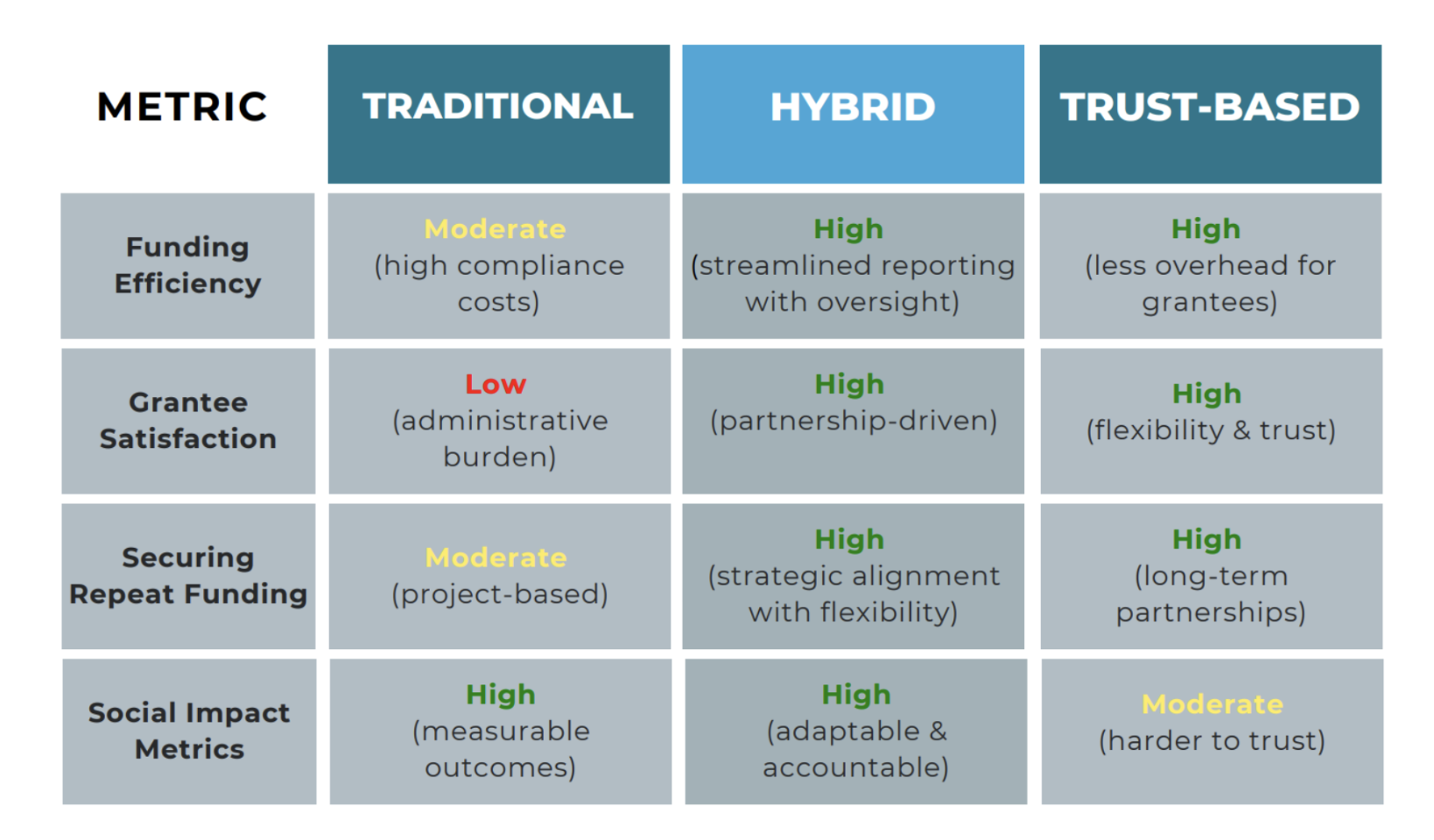
A year later, the question remains, but as organizations have adapted to changing conditions, the conversation has shifted.
Rather than debating whether a hybrid philanthropic approach “works,” many organizations are now focused on how to operationalize trust without losing accountability, how to measure impact in ways that support learning rather than compliance, and how funding models can better support resilience in an increasingly complex environment.
In this blog post, we revisit the question that anchored our whitepaper to reflect on what has changed, what has held up, and what we’re seeing emerge in practice across the sector in 2026.
What Changed (Or Became Clearer) in 2025
Conversations Are More Operational Than Ideological
In 2025, the dialogue around funding models shifted from whether trust-based approaches should exist to how they are actually being implemented in practice.
According to Grantmakers for Effective Organizations (GEO), more than 170 philanthropic funders signed on in 2025 to commitments that reflect trust-based principles, including more flexible, reliable, and equitable funding practices, a clear signal that the field is moving beyond theory to operational adoption.
Similarly, the Trust-Based Philanthropy Project’s 5-Year Impact Report shows that trust-based philanthropy isn’t just an ideological stance anymore — it’s being built into tangible practices, toolkits, and internal grantmaking processes within institutions of all sizes.
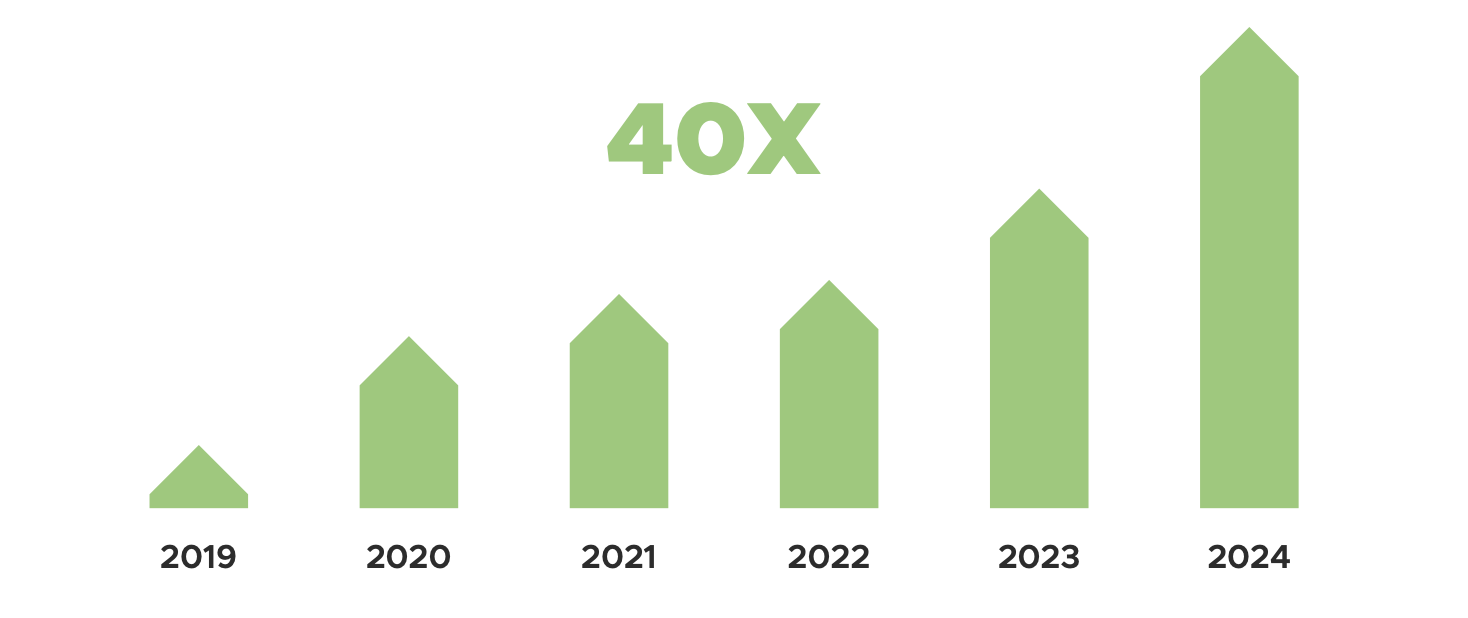
According to their report, between 2019 and 2024, web-based mentions of "trust-based philanthropy" grew 40X.
Taken together, these developments suggest that the conversation has matured: funders are less focused on debating the value of trust-based models and more focused on the practical mechanics of integrating them alongside traditional accountability systems.
Measurement Expectations Are Evolving, Not Disappearing
One of the most persistent concerns about shifting toward more flexible funding models is accountability: If we give more trust, do we lose rigor?
The evidence suggests the answer isn’t “either/or,” but “both/and.” According to insights from Candid, funders committed to trust-based principles are actively evolving how they approach measurement — not abandoning it. Practices like simplifying reporting, reducing unnecessary paperwork, and aligning metrics with learning goals are gaining traction, allowing funders to maintain accountability while reducing burden on nonprofits.
This shift reflects a broader trend: rather than seeing measurement as a compliance checkbox, more organizations are treating it as a tool for shared learning and adaptation, balanced with clear expectations about impact and progress.
Capacity & Resilience as Impact Outcomes
Trends in the philanthropic space have also suggested that many funders are also broadening what they define as “impact.” Organizational capacity and resilience, once treated as overhead or secondary concerns, are increasingly recognized as legitimate outcomes of philanthropic investment. Flexible, multi-year funding has shown that when organizations are financially stable, staffed appropriately, and able to plan beyond a single grant cycle, they are better positioned to deliver sustained, meaningful impact. Rather than competing with program outcomes, capacity and resilience are now understood as the foundation that makes those outcomes possible.
Centering Community Voice is Vital, Not Optional
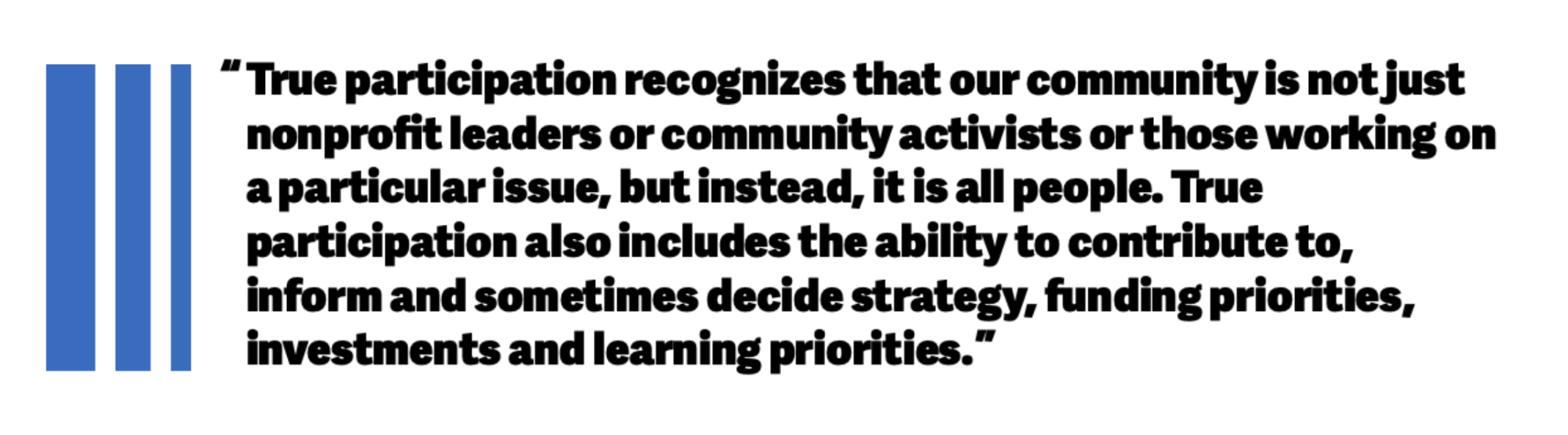
Across the philanthropic spectrum, one shift has become increasingly clear: meaningful impact cannot be designed solely by funders or intermediaries operating at a distance. Centering the community voice is no longer a best practice or an equity lens to be applied selectively, it is foundational to effective strategy, responsible funding decisions, and sustainable outcomes.
This shift parallels the underlying principles of a hybrid approach which moves power closer to those on the ground influencing real change. It creates space for feedback loops that inform strategy in real time, and acknowledges that communities are not only beneficiaries, but also active partners in designing solutions that drive real impact.
Moving Forward With Intentionality
Revisiting this question in 2026 makes one thing clear: the debate between trust-based and traditional philanthropy has evolved. What once felt like a philosophical divide is increasingly a practical design challenge around how to fund in ways that are both accountable and adaptable, rigorous and human.
Across the sector, we’re seeing less emphasis on choosing a single model and more focus on intentional hybrid approaches. Funders are operationalizing trust through clearer processes, evolving how they measure impact to support learning, and recognizing that organizational capacity and resilience are not peripheral concerns but essential conditions for long-term success.
The question is no longer trust or control, but how thoughtfully the two are woven.
