
The Strategy That Listens: Why Community Voice is Your Greatest Strategic Asset
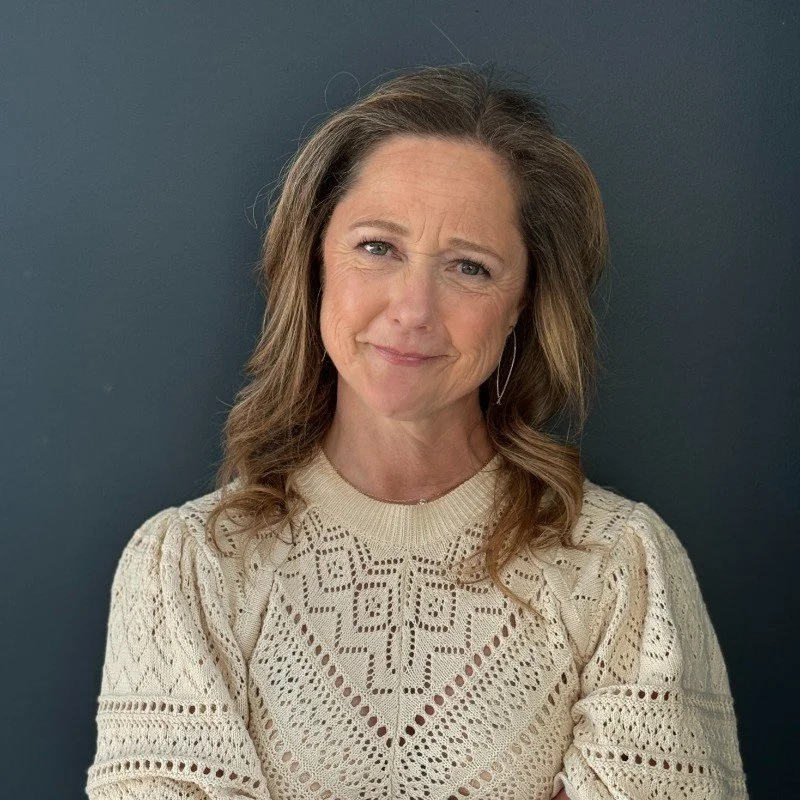
This Blog Post is written by Sophie Blondeau, Partner and Chief Strategy Officer at Sowen.
After 25 years of studying human behavior across advertising boardrooms and nonprofit strategy sessions, I've come to a conviction I return to again and again: the most sophisticated strategic plan in the world is just a stale document if the people it's meant to serve had no hand in shaping it.
I call the alternative community-centric strategic planning — and it's the throughline connecting every piece of meaningful work I've done, whether for a Fortune 500 brand or a Non-profit organization.
Two worlds, one principle
Early in my career, I wrote Creative Strategies for major advertising clients — documents that connected a company's products and services to the consumers they were designed for. Later, I began writing strategic plans for nonprofits and social impact organizations — documents that connected programs and services to the communities they existed to serve. The format changed. The stakes changed. But the fundamental question was always the same: Do you actually know the people you're trying to reach?
Both documents function as a north star for the strategic process. Both inform short-term decisions and long-term vision. And both succeed or fail based on the same variable: how deeply and honestly the organization understands the community at the center of the work.
Data tells you what. People tell you why.
At Sowen, we are enthusiastic champions of quantitative data. Numbers matter. They establish baselines, reveal patterns, and drive accountability. But numbers alone leave a critical gap — and I've seen that gap swallow otherwise excellent strategies whole.
When we worked with a U.K. based cancer research organization to understand the impact of their patient tool, we started with the numbers: usage rates, frequency, stage of treatment. The data was solid. But it was the one-on-one interviews with patients and the nurses who cared for them that delivered the real insight — that peer advice was as powerful, and sometimes more powerful, than clinical guidance. That's not something a dashboard tells you. That's something a person tells you when they feel safe enough to be honest.
For a national organization that empowers older adults we helped them understand why some older adults enrolled in one online class while others took four. The quantitative data showed us what was popular. But when we sat down with participants directly, we discovered something the data couldn't see: people weren't taking more classes because their lives were genuinely full. Morning walks with friends. Volunteer commitments. Grandchildren. Doctor's appointments. The barrier wasn't their interest — it was their schedule. Without that conversation, any strategy to increase engagement would have missed the mark entirely.
For an apparel company we conducted small group interviews with factory workers. This led us to the insight that seeing the workers beyond their work experience and understanding their whole life perspective was incredibly important to measuring whether the programs were indeed meeting their needs effectively. It was only in small group interviews that discovered that linked to each factory worker was a vast and precious extended family that depended on them. The strategy had to serve the entire network, not just the individual worker.
Most recently, for The Desert Healthcare District in the Coachella Valley, we designed seven community sessions — one in each key district — specifically to hear how residents were experiencing their health and their community. Not to validate assumptions. To listen. That listening became the foundation of a strategic plan focused on the community's actual greatest needs, not the ones we arrived with.
What I know to be true
After hundreds of these conversations across sectors and communities, here is what I've come to understand about doing this work well:
If you can't paint a full portrait of the community you serve, you're working in the dark. That portrait has to be both quantitative and qualitative. You need to understand not just who they are, but what they're trying to accomplish — and what stands in the way of getting there. Without that, you're not planning; you're guessing.
The quality of what you hear depends entirely on the space you create. Community voice can only be captured authentically when people feel genuinely safe to share it. That means designing for trust — the right setting, the right facilitation, the right questions, the right translators, the right listeners.
Active listening is not the same as confirmation listening. There is a significant difference between going into a community conversation hoping to hear what you already believe and going in genuinely open to being surprised. The most valuable strategic insights I've ever gathered came from something I didn't expect to hear.
Community voice isn't a one-time input — it belongs at multiple points in the process. It should inform the initial framing, pressure-test the direction, and refine the execution. A single focus group at the start is not community-centric planning. It's a checkbox.
This is the work I love most. Not because it's harder — though it is — but because it's where strategy stops being abstract and starts being real. Where a plan stops sitting on a shelf and starts changing lives.
The community is not a checkbox. It is the strategy.
