
Why We Sat in Rooms Across Seven Cities and Listened with Intention
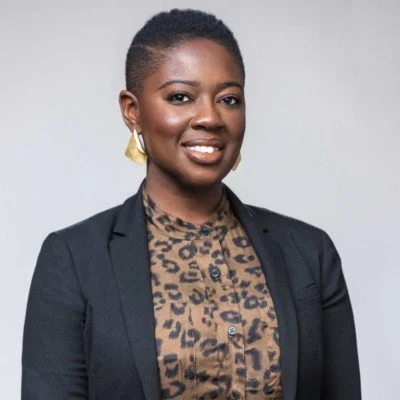
This blog is written by Dr. Angelica Geter, Strategic Advisor - Senior Health and Equity Advisor to Sowen.
There is something sacred about being invited into a community's story.
When our team at Sowen was selected to lead the strategic planning process for the Desert Healthcare District and Foundation, success, we knew, wouldn't come without first earning a real understanding of the community, especially who they are, what they need, and what matters to them. We needed an approach that would go way beyond data reviews and stakeholder interviews. It would require us to be in the room — in seven rooms, across seven communities — and to listen with intention. The planning process had one north star: the community.
For more than twenty years, my passion has been developing resources for communities. I've led this kind of work across the country, from my early days in Mississippi to serving as Atlanta's first Chief Health Officer to national health equity initiatives. But every community is different, and being in Coachella Valley reminded me why the process of building a community strategy matters just as much as the strategy itself.
Understanding What Was at Stake
The Desert Healthcare District and Foundation serves more than 400,000 residents across the entire Coachella Valley. The strategic plan we were tasked with developing would guide the District's funding decisions, programming, partnerships, and policies for the next five years and beyond. This wasn't an academic exercise. This was about real resources reaching real communities.
The Coachella Valley is a region that holds multitudes. Nine cities and several unincorporated communities. A majority Hispanic and Latino population, with roughly 40% of residents preferring to speak Spanish at home, a vibrant LGBTQ+ community, Tribal Nations, retirees, farmworkers, and so much more. Communities where world-class resorts sit miles from federally designated Medically Underserved Areas. A region where one in four adults is now spending less on food to cover basic needs, and where more than 23,000 working-age residents have no health insurance at all. The disparities are lived realities that shape how health is experienced across this region. We knew that any strategic plan that failed to account for that full picture would miss the mark.
Why Being a Consultant Mattered
Here's what I shared on the Healthy Desert Healthy You podcast when asked about our approach: We understand that we are visitors in YOUR home. And so we understand the value of listening and honoring your journey.
That framing was everything. When you walk into a community as a visitor rather than an authority, it changes the entire dynamic of the conversation. Our role was not to defend past decisions or steer the conversation toward predetermined outcomes. Our role was to hold space, intentionally and thoughtfully, so that residents could tell us what they needed and we could incorporate that feedback actively into the strategic planning process. We didn’t listen just for the sake of listening.
We also brought something important to this process: fresh eyes combined with deep experience. Our team did the work of learning from and collaborating with the Desert Health staff and board of directors and reviewing the information that was already out there, which included decades of data, prior assessments, and existing reports. This step was important because we didn't want to overburden the community by asking them to share what had already been gathered. We did our part to understand the background and the history. But the most important part, last but definitely not least, was asking the community: Are we on the right track? And if we aren't, where do we need to be?
That question can only be asked authentically by someone whose job is to listen, with intention and empathy.
Seven Listening Sessions. 7518+ Miles. One Commitment.
My colleagues and I traveled from across the country, more than 7518 miles (multiple times), to lead seven community listening sessions across the Coachella Valley in February 2026 — from Desert Hot Springs to Indio, from Cathedral City to the College of the Desert campus. Each session was designed to be as inclusive as possible. And I don't mean inclusive as a buzzword. I mean, we thought carefully about every barrier that might keep someone from participating.
Language access was non-negotiable. Every session offered translation, and a community survey was made available in both English and Spanish. We adapted to each session’s audience. Some sessions were primarily held in Spanish with us listening to the English translation and for others the roles were reversed. The Desert Healthcare District and Foundation provided leadership, community engagement, guidance and advice, technical support, and meals because it was understood that asking someone to give up their morning, evening, or afternoon means asking them to give up time with family, time to rest, or time they might otherwise spend working. Together, we planned virtual sessions for those who couldn't attend in person. And for those who couldn't do any of that, we created a short, thoughtful survey — available online, through QR codes, and yes, old-school with pen and paper — so that every voice had a pathway to be heard.
Inclusivity in this work means more than race and gender. We wanted diversity of age, background, and experience. We had a broad definition of community. We welcomed the partners that provide services to the community and are on the ground on a daily basis. In some cases, an attendee played multiple roles: employee of a service organization, mother, and caregiver to elderly parents. We wanted everyone in that room. Because a strategic plan that only reflects the voices of those who have the time and resources to show up is not a plan for the whole community.
What We Heard
I'm going to keep some of the specifics close for now — the District's Board and staff deserve to be the ones who share the final plan when it's ready. One clear theme also emerged across sessions… as with most cities across the nation, residents don't have enough providers to meet local health needs. Residents described waiting months for appointments. They described driving long distances — sometimes outside the valley entirely — just to see a specialist. They described the exhaustion of a system that asks too much of people who already have too little.
What Makes a Strategic Plan Successful
I've been doing this work long enough to know what separates a plan that creates change from one that collects dust. A successful strategic plan is one that was inclusive, intentional, and developed with the community in mind. It includes policy, partnership, measurement, and it creates impact. If we don't have all of those key components put together, then we've missed the mark.
That has been our process from the very beginning. Step by step. Thoughtful, intentional questions at every stage. Working with the District's staff and Board of Directors. Reviewing what already exists. Identifying the pillars. And then — the part that matters most — going to the community and asking: Did we get it right? It’s also critical to acknowledge that the integration of the community voice needs to be an ongoing process, not something to check off a list once.
The other piece I always come back to is this: the District can't do everything. And they shouldn't, because we have to find the best experts and partners possible to support this work. A great strategic plan doesn't just identify what needs to happen. It identifies who needs to be at the table to make it happen.
What I Carry Forward
Every community I've had the privilege of working with has taught me something. The Coachella Valley reinforced a lesson I first learned as a young public health professional in Mississippi: proximity changes everything. You have to be close enough to hear the things that don't make it into surveys — the sigh before someone answers a question, the story that only comes out when someone feels safe enough to share it.
To the residents of the Coachella Valley who showed up to listening sessions, who completed surveys, who trusted the process even when they had every reason not to — thank you. Your voices are the foundation of this work.
We are shaping the future health of the generations to come. We are working to establish equitable access to the resources that people need to not only live a long life, but to live a healthy life while they are a part of the Coachella Valley.
This is the work I've been leading for more than twenty years, and four of those years alongside my colleagues at Sowen. We’re so excited to do it in support of the Desert Healthcare District & Foundation and the people of the Coachella Valley.
Dr. Angelica Geter is a public health scientist, strategist, and healthcare and community consultant with Sowen. She is the former Chief Health Officer of the City of Atlanta and founder of AGC | Data and Impact Collective. For more than two decades, she has applied her expertise in public health, psychology, and policy development to tackle health disparities related to race, gender, and systemic inequity.
